No products in the cart.
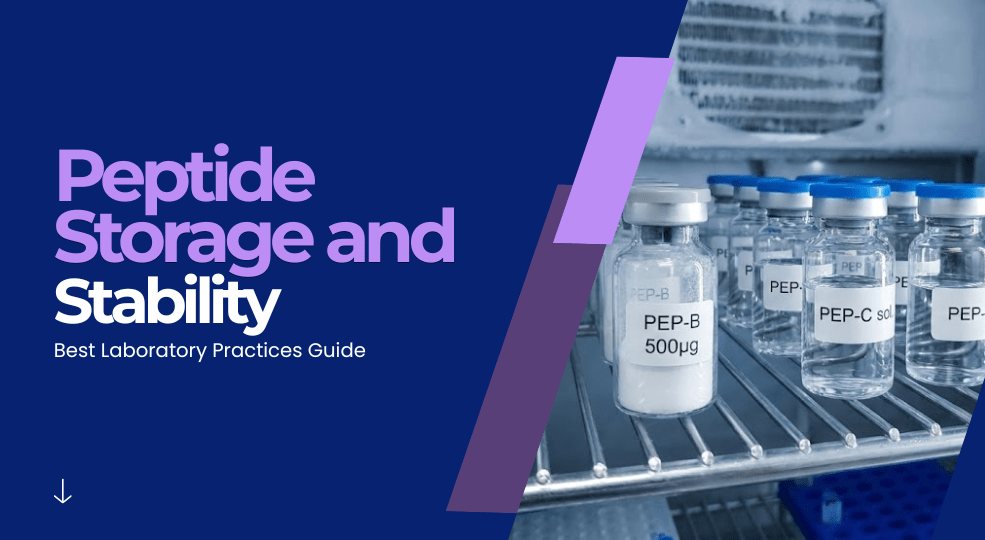



Peptides are highly sensitive biomolecules, and their integrity can change rapidly if they are not stored under appropriate laboratory conditions. Factors such as temperature, moisture, light exposure, and freeze–thaw cycles can significantly impact molecular stability and experimental consistency.
This research-only guide outlines the best practices for storing peptides, how to maintain stability during laboratory workflows, and the variables researchers must consider when handling lyophilised and reconstituted materials.
All information is intended strictly for scientific, analytical, and in-vitro use—never for human or therapeutic application.
Peptide stability refers to the molecule’s ability to retain its structural integrity, purity, and functionality over time. Proper storage prevents:
Peptides are typically supplied as lyophilised (freeze-dried) powders, which provide enhanced shelf stability due to the removal of moisture. Once reconstituted, however, their stability decreases significantly.
Understanding these differences is essential for maintaining reproducibility in laboratory studies.
Research outcomes depend heavily on the chemical stability of peptides. When handled correctly, peptides maintain:
Incorrect storage can lead to:
Many researchers review a peptide’s COA (Certificate of Analysis) and HPLC profile to understand baseline purity before beginning storage and stability testing.
Peptide stability is critical in studies investigating:
Stability directly influences reproducibility and validity across these scientific areas.
Lyophilised peptides are relatively stable, especially when protected from moisture and heat.
Best practices include:
Environmental exposure can affect the integrity of peptide bonds.
Repeated thawing accelerates degradation.
To avoid this:
Reconstituted peptides are far less stable than lyophilised powders.
General guidelines:
For dilution, many researchers use Bacteriostatic Water, which helps inhibit microbial growth during multi-use workflows.
Different peptides dissolve optimally in:
Selecting the proper solvent is crucial for preventing pH-driven degradation.
Every vial should be labelled with:
Accurate documentation ensures reproducibility and compliance.
A well-prepared COA may include:
Understanding these parameters helps researchers plan long-term storage strategies.
Peptide storage and stability are essential factors in achieving consistent, reproducible results in scientific research. Understanding how temperature, moisture, light exposure, diluent selection, and freeze–thaw cycles influence peptide integrity ensures that experimental outcomes remain reliable and accurate.
PurePeptix supports researchers with a wide range of high-purity peptides and laboratory compounds, along with comprehensive guides for handling, reconstitution, and storage. Explore our Research Library and product catalogue to enhance your laboratory workflows.