No products in the cart.




Peptides play a central role in modern biochemical and cellular research, making them essential tools for laboratories studying molecular signalling, metabolic pathways, and structural biology. Although small in size, peptides help researchers investigate how cells communicate, how enzymes interact, and how biological processes are regulated.
This guide provides a clear and accessible overview of what peptides are, how they function in scientific research, and why they are so widely used in laboratory environments.
Peptides are short chains of amino acids linked by peptide bonds. While proteins are long and complex, peptides are smaller and easier to study, making them valuable in research models that examine:
Cellular communication
Enzyme activity
Receptor signalling
Hormonal pathways
Structural interactions
Peptides occur naturally in the body, functioning as messengers, regulators, and building blocks. In research settings, synthetic peptides allow scientists to recreate or mimic these natural processes with high precision.
In laboratory and in-vitro environments, peptides serve as controlled variables to help researchers understand:
Peptides can bind to specific receptors on a cell’s surface, activating or modulating pathways related to growth, metabolism, communication, and stress responses.
Synthetic peptides help researchers study enzyme-substrate interactions, enzyme inhibition, protein folding, and biochemical transformations.
Their small size makes peptides ideal for structural research, binding analysis, and molecular modelling.
Peptides are used to observe how nutrients, hormones, and metabolic signals move through cells and tissues in controlled environments.
Peptides are widely examined in laboratory studies involving:
Cellular metabolism
Mitochondrial function
Receptor activation and inhibition
Protein–protein interactions
Neuromuscular junction signalling
Metabolic and hormonal pathways
Oxidative and redox processes
In all cases, peptides serve as tools for understanding mechanisms, not as products intended for human use.
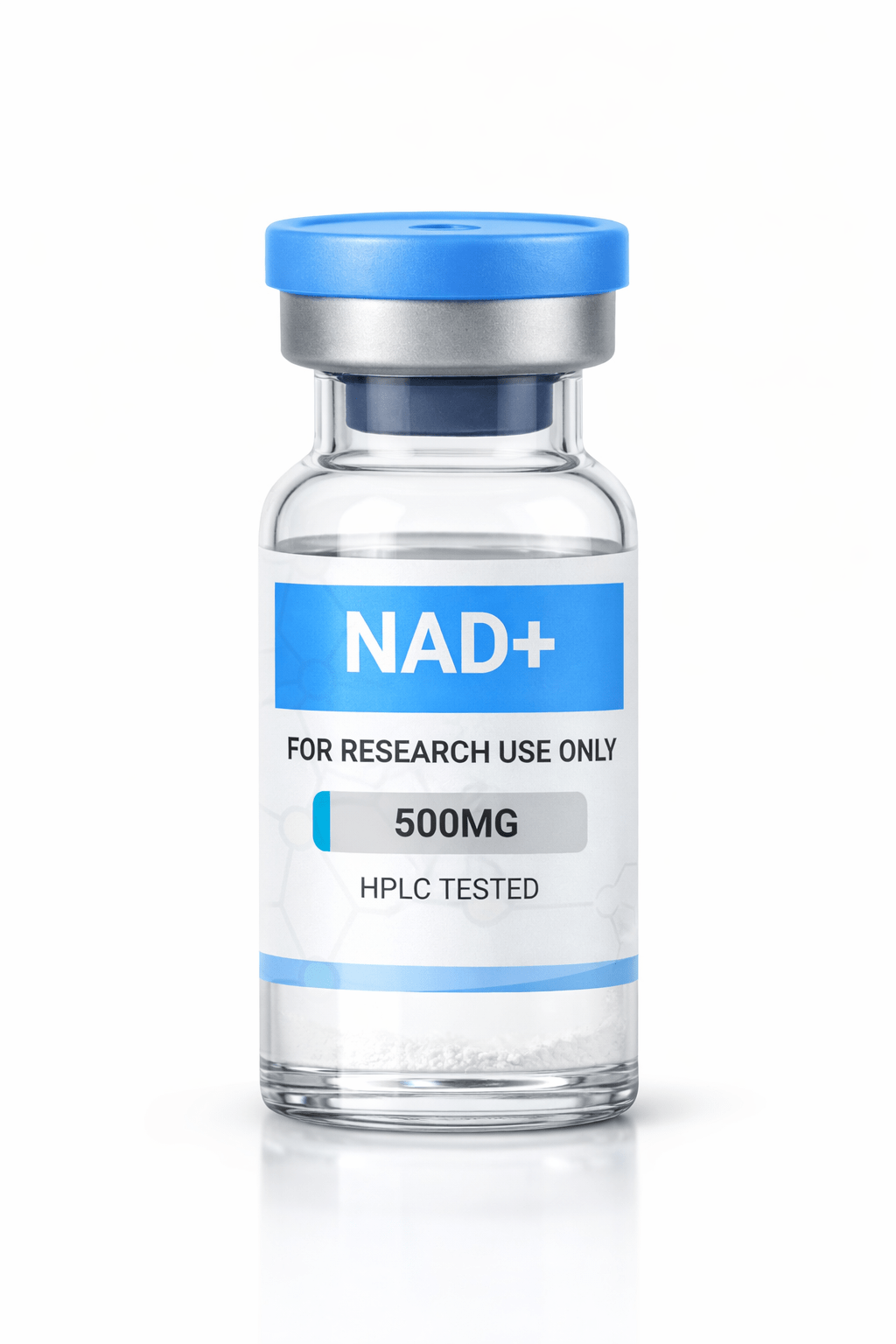
Peptides are studied in a wide range of laboratory models. Researchers exploring metabolic pathways often also examine compounds such as NAD+ 500mg, which plays a central role in cellular energy transfer.
→ Explore the research compound NAD+ 500mg here.
Researchers investigating peptide signalling may also work with multi-pathway reference materials such as CJC1295 (No DAC) + Ipamorelin, used to study growth hormone–related receptor activity.
→ View the CJC1295 (No DAC) + Ipamorelin research page here.
Although protocols vary depending on the compound, standard laboratory considerations include:
Use sterile tools and environments
Minimise exposure to air, moisture, and temperature changes
Follow laboratory guidelines for solubility and diluent selection
Avoid repeated freeze–thaw cycles
Use sterile water or bacteriostatic water based on research method
Store lyophilised peptides in a cool, dry place
Refrigerate or freeze after reconstitution as required
Follow each compound’s stability profile
Peptides at PurePeptix are supplied strictly for research and in-vitro use
Not suitable for medical, therapeutic, household, or human use
Research personnel must comply with Australian laboratory regulations
Peptides are essential tools for understanding how biological systems function at a molecular level. Their precision, versatility, and structural simplicity make them ideal for controlled scientific studies involving signalling pathways, cellular metabolism, and biochemical mechanisms.
To explore high-purity research peptides and lab-grade compounds, visit PurePeptix’s full catalogue and access materials designed for advanced laboratory environments.