No products in the cart.
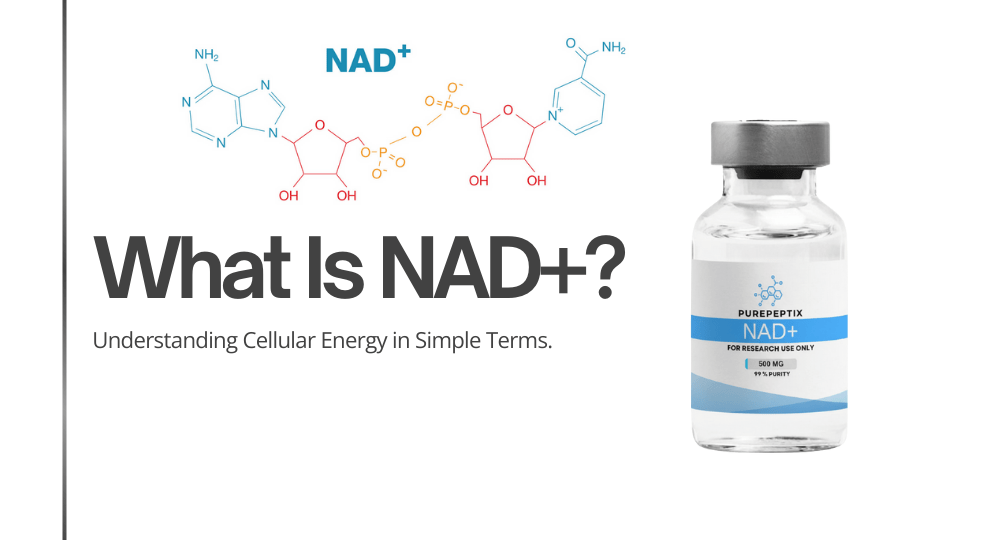



NAD+ is a naturally occurring molecule that plays an essential role in how cells manage energy. While the term may sound complex, its function is quite straightforward when explained simply. In scientific research, NAD+ is widely studied to better understand cellular metabolism, energy transfer, and biochemical processes.
This article explains what NAD+ is, why researchers study it, and how it is examined in laboratory settings—all in clear, beginner-friendly language. This content is intended strictly for research and educational purposes.
NAD+ stands for nicotinamide adenine dinucleotide. It is a molecule found in all living cells and is involved in basic biochemical reactions. In laboratory research, NAD+ is examined because it helps scientists understand how cells convert nutrients into usable energy.
Rather than acting as energy itself, NAD+ functions as a carrier, helping move electrons during chemical reactions inside cells. This makes it a key molecule in metabolic and cellular studies.
Cells rely on complex chemical reactions to function. Many of these reactions involve transferring electrons from one molecule to another. NAD+ plays a central role in this process.
Researchers study NAD+ because it is involved in:
Understanding how NAD+ behaves helps scientists map how cells generate and regulate energy under controlled laboratory conditions.
In research environments, NAD+ is examined using:
These methods allow researchers to observe NAD+ interactions, stability, and behaviour without involving human or animal use.
Cells require energy to maintain structure and perform functions. During laboratory studies, NAD+ is tracked because it assists enzymes in converting nutrients into energy-related molecules.
Think of NAD+ as a helper molecule that allows energy-related reactions to proceed efficiently in research models. Without it, many metabolic reactions would not function properly in experimental systems.
For laboratory accuracy, researchers use research-grade NAD+ that meets strict quality standards. This includes:
These standards ensure consistency and reliability in scientific experiments.
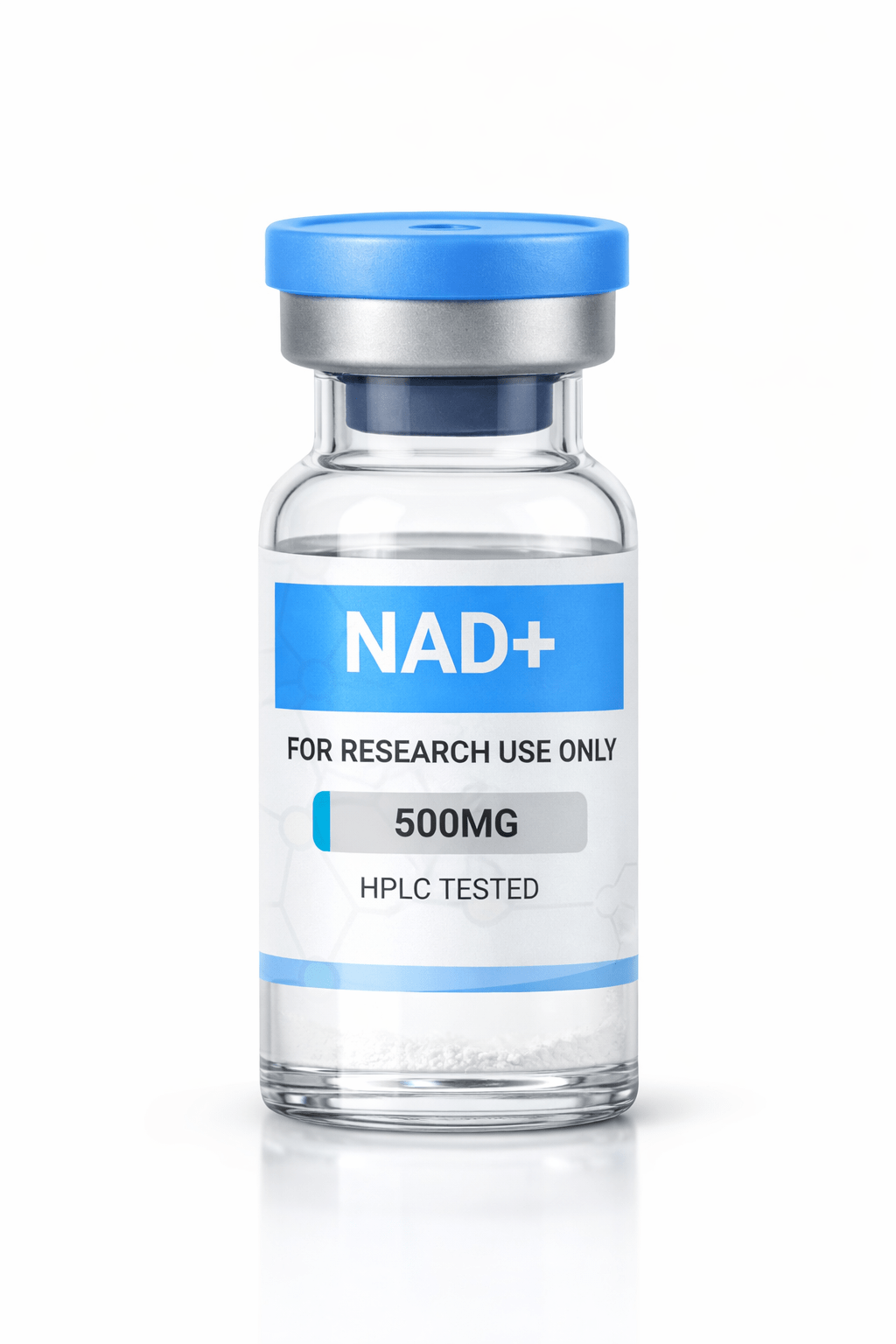
PurePeptix provides NAD+ 500mg as a research-only compound suitable for biochemical and laboratory studies. Each batch is supplied with analytical documentation to support research transparency and quality control.
Explore the NAD+ research compound here: NAD+ 500mg
NAD+ is a foundational molecule in cellular energy research. By studying it in controlled laboratory settings, scientists gain valuable insights into metabolic and biochemical processes. Understanding NAD+ does not require advanced scientific knowledge—just a clear explanation and the right research context.
This guide serves as an educational reference for those interested in how cellular energy is studied in modern research environments.